
The Bergen Knowledge Hub aims to:
- Be a catalyst for collaboration, for knowledge exchange, and for exchange of ideas.
- Engage research and scholarship with policymaking in Europe and in the Nordic and Baltic Regions, on behalf of Academia Europaea and in close collaboration with national academies of the region.
- Promote excellent research from and about the Nordic and Baltic Region, its surrounding seas and the Arctic with emphasis on marine and maritime research, sustainability and the Nordic social model, through scholarly workshops and public events.
- Demonstrate the importance of scientific scholarship and maximise engagement with our members, policymakers, private and public entities and the wider public.
- Stimulate scientists to accomplish stringent and unequivocal communication with decision makers, media, and the public.
The Academia Europaea is the pan-European Academy of Humanities, Letters, Law, and Sciences. The Academia was founded in 1988 as the functioning Europe-wide Academy that encompasses all fields of scholarly inquiry.
Social scientist Stein Kuhnle MAE has been a member of the Governance, Institutions and Policies section of Academia Europaea since 2012. One of his main scholarly interests for close to 5 decades have been the welfare state. His introduction to the Building Bridges plenary session “Survival of the Welfare State?” on 15 October will look back at the evolution of the welfare state, but also address challenges today. Stein Kuhnle is a Professor emeritus at the Faculty of Social Sciences Department of Comparative Politics at the University of Bergen. He is also a steering group member at the Academia Europaea Bergen Knowledge Hub.
At the Annual Meeting held in Tromsø on 15 April 2026, Professor Lise Øvreås was elected as a new Board Member of the Polar Academy. At the same meeting, Brit Lisa Skjelkvåle was elected as the Academy’s first Deputy Board Member following an amendment to the Academy’s statutes introducing the possibility of electing up to two deputy members to the Board. Both Øvreås and Skjelkvåle emphasise the growing importance of polar research at a time when the Arctic is experiencing rapid environmental change and increasing geopolitical attention.
The Norwegian Academy of Science and Letters has awarded the Abel Prize for 2026 to Gerd Faltings of the Max Planck Institute for Mathematics, Bonn, Germany “for introducing powerful tools in arithmetic geometry and resolving long-standing diophantine conjectures of Mordell and Lang.”Gerd Faltings is a towering figure in arithmetic geometry. His ideas and results have reshaped the field.
The Rethinking Arctic Collaboration project, coordinated by the Academia Europaea Bergen Hub at the University of Bergen and supported by UArctic funding (2023–2025), concluded in 2025 after two years of intensive dialogue, analysis, and international engagement. In its final year, the project shifted from mapping immediate geopolitical disruptions to articulating forward-looking scenarios for Arctic science diplomacy toward 2032, in anticipation of the Fifth International Polar Year. The initiative brought together partners from Europe, North America, and Indigenous institutions.

The Arctic Frontiers 2026 Conference in Tromsø marked a milestone this year, drawing more than 1,100 participants and over 120 international journalists—its highest attendance to date. Lise Øvreås, Academic Director of the Academia Europaea Bergen Hub, participated in in several panels at the conference. Themed “Turn of the Tide,” the event captured global attention as leaders, researchers, and policymakers converged to discuss a rapidly changing Arctic .
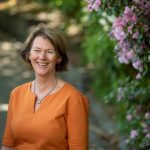
Academia Europaea Bergen Hub is welcoming Lise Øvreås as the new Academic Director from January 2026. She was president of The Norwegian Academy of Science and Letters from 2021 to 2024. She is also the newly elected President of EASAC (the European Academies Science Advisory Council). Her positions in EASAC and in AE-Bergen Hub will run parallel to her continued scientific research as an accomplished microbiologist.

Time has flown by, and as 2025 draws to a close, so too does my term as AE-Bergen Hub Director, Eystein Jansen writes in his Christmas greeting, as he wishes members and other friends of the hub a joyful festive season and an active year ahead. In his Christmas greeting, you’ll find out who will be his successor and lead the hub for the coming four years. He also writes about the current situation in academia, in science and in society. In a remarkably short time, the environment in which science is conducted has changed dramatically. Security considerations in research have moved to the forefront, and discussions about the dual-use potential of research outcomes have become routine, Eystein Jansen writes.
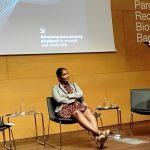
– How many of you think there is politics in science, moderator Scott Bremer asked the audience at the start of the YAE (Young Academy of Europe) panel event “Public trust in science and navigating political tensions” at Building Bridges Barcelona. Most of the audience raised their hands. Even as this very informal poll seemed to confirm the presence of politics in science, the rest of the panel focused on some of the more elusive disguises that politics can come in in science, such as barriers, taboos or self-censoring in the face of possible controversies.
Norge som havnasjon kontrollerer enorme havområder, fem ganger større enn landområdene våre. – Her ligger grunnlaget for store deler av økonomien vår. Som nasjon har vi et fortrinn i å kunne manøvrere, operere, kontrollere, forvalte og forstå havet, sa AE-Bergens prosjektleder Ole Rasmus Øvretveit i sin innledning til debatten «Sikkerhet i havdypet – Trusler og konsekvenser» under Arendalsuka. Øvretveit ledet to debatter knyttet til norsk havpolitikk under Arendalsuka, med Havbyen Bergen som arrangør. Først ut «Sikkerhet i havdypet – Trusler og konsekvenser», deretter «Sikkerhet i havdypet – løsninger og forretningsmuligheter».
Our webinar, held on 17th July 2025, explored the questions: What is ‘One Health’, and what role does the sustainability of the environment and ecosystems play within it? ‘One Health’ is an integrated approach to optimising the health of humans, animals and ecosystems. It is supported and promoted by major bodies like the UN Environment Programme (UNEP), World Health Organization (WHO) and others. Yet, many argue that One Health has evolved to focus heavily on human health, without paying enough attention to the vital connection it has with the environment and ecosystems, on which all life depends.